1. Encroachment Onto Public Coastal Land
Are any stairways, retaining structures, landscaping works, pipelines, irrigation systems, stormwater infrastructure, or associated improvements located outside lawful property boundaries and encroaching onto public coastal land or protected dune systems?
Do such structures comply with:
• the National Environmental Management Act (NEMA)
• the Integrated Coastal Management Act (ICMA)
• municipal planning approvals
• coastal setback requirements
• dune protection regulations
• stormwater management requirements
• environmental rehabilitation obligations
• and title deed restrictions?
2. Interference With Natural Dune Processes
There are growing concerns that certain structures and modifications may interfere with:
• natural sand migration and replenishment
• dune vegetation stability
• natural stormwater dispersion
• groundwater movement
• and post-storm dune recovery.
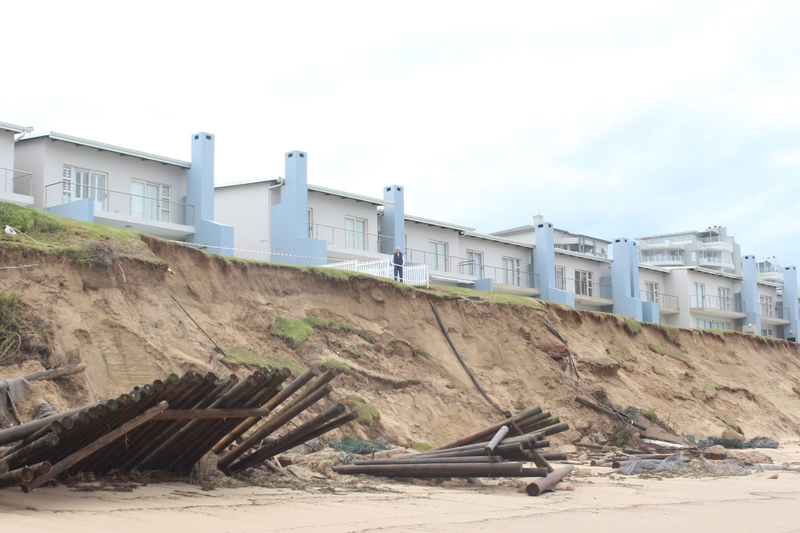
Where dune systems are cut through, compacted, landscaped incorrectly, or subjected to concentrated water discharge, erosion may worsen substantially during severe weather events.
3. Stormwater and Runoff Management
Additional concern exists regarding concentrated stormwater discharge into sensitive dune areas.
Poorly controlled runoff may accelerate erosion by:
• washing sand from stabilised areas
• undermining dune vegetation root systems
• creating erosion channels and scour points
• saturating dune structures
• and destabilising dune faces during heavy rainfall events.
Questions accordingly arise regarding:
• approved stormwater management designs;
• runoff discharge points;
• sub-surface drainage systems;
• irrigation overflow systems;
• erosion mitigation measures;
• and whether adequate hydrological and coastal engineering assessments were undertaken prior to approvals being granted.
4. Rehabilitation and Coastal Protection Measures
Where are the environmental management plans, rehabilitation method statements, and maintenance obligations relating to:
• dune disturbance during construction
• staircase installations
• excavation or earthworks
• landscaping within dune systems
• irrigation and stormwater infrastructure
• sand replenishment and dune rebuilding measures
• indigenous vegetation restoration
• removal of alien invasive vegetation
• and long-term rehabilitation obligations?
There are increasing concerns that insufficient rehabilitation, inadequate vegetation stabilisation, and lack of proper sand replenishment may leave sections of the coastline increasingly vulnerable to future erosion.
International experience has shown that once natural dune systems are severely degraded, rehabilitation often requires:
• large-scale sand replenishment
• dredging and beach nourishment operations
• improved stormwater dispersion systems
• indigenous vegetation restoration
• controlled public access measures
• and redesign or removal of structures interfering with natural dune movement.
Healthy natural dunes remain the first and most effective line of coastal defence.
POSITION
A formal call is made for:
• an independent coastal engineering assessment
• verification of approvals, legal footprints, and coastal setback compliance
• disclosure of environmental authorisations and rehabilitation obligations
• investigation into alleged encroachments onto public coastal land and protected dune systems
• clarification regarding structures and infrastructure allegedly extending beyond lawful property boundaries
• assessment of stormwater discharge impacts on dune stability
• review of historical and ongoing dune management practices
• and urgent consideration of sand replenishment, dredging, vegetation rehabilitation, and improved stormwater control measures to restore long-term dune stability.
It is further recorded that:
• natural storm activity alone should not automatically be accepted as the sole cause of dune destabilisation;
• poorly managed human interference may have materially exacerbated erosion processes
• inadequate stormwater management may be accelerating dune erosion in certain areas
• and failure to properly enforce environmental and coastal protection legislation may expose both the public and adjacent property owners to increasing long-term risk.
All statements are based on publicly observable conditions, publicly accessible information, and community concerns requiring clarification and independent investigation.