
WHAT IS THE CAPITAL REPLACEMENT RESERVE (CRR)?
Most residents have never heard of the Capital Replacement Reserve (CRR), yet it is one of the most important financial mechanisms within local government.

Most residents have never heard of the Capital Replacement Reserve (CRR), yet it is one of the most important financial mechanisms within local government.

Mossel Bay is booming, but the financial math behind this growth is deeply broken.
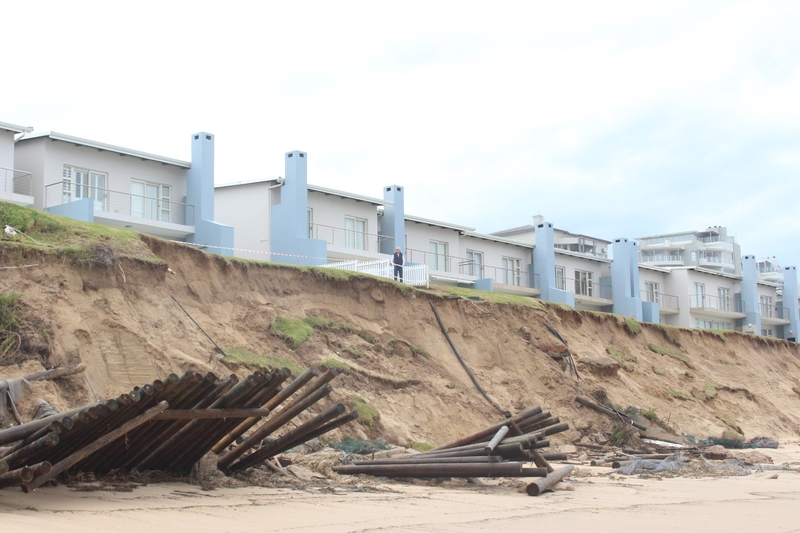
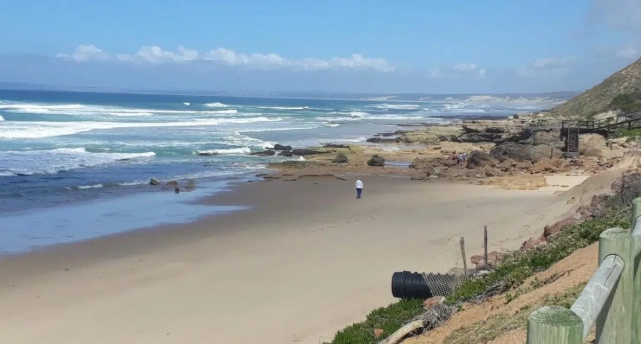
Where dune systems are cut through, compacted, landscaped incorrectly, or subjected to concentrated water discharge, erosion may worsen substantially during severe weather events.
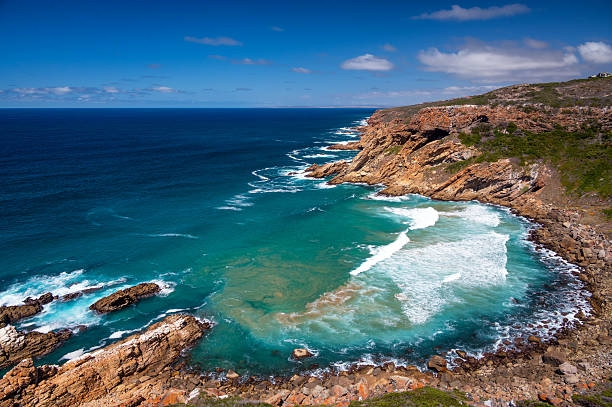
In 2022, Mossel Bay stood as one of South Africa’s strongest performing municipalities from both a financial and infrastructure perspective.

Mossel Bay residents are once again being told that the municipality is among the “cheapest” in the Western Cape based primarily on property rate comparisons published by the Executive Mayor.
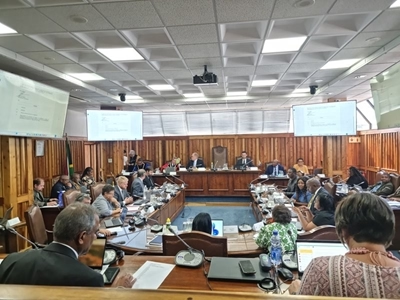
Mossel Bay does not appear to have a shortage of public communication.
It has a growing shortage of meaningful public participation.
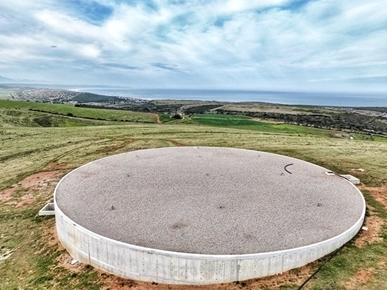
Mossel Bay Municipality has publicly stated that the new Vale Valley Reservoir forms part of its long-term bulk water infrastructure expansion strategy linked to future growth and development planning.
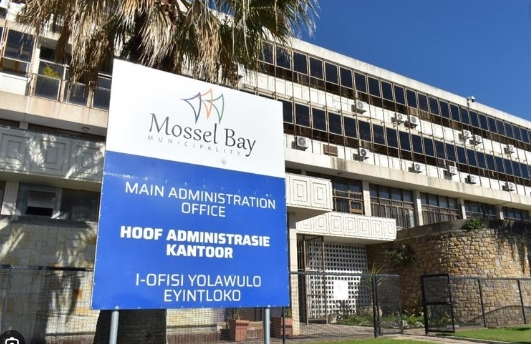
The streets are maintained. Emergency response systems operate efficiently. Infrastructure teams perform admirably. Public spaces remain orderly and operational.
Public Funds, Private NPC Structures, and the Collapse of Transparent Governance in Mossel Bay

One of the most overlooked governance issues in Mossel Bay today is not simply rates, tariffs, or infrastructure spending.
It is public land.
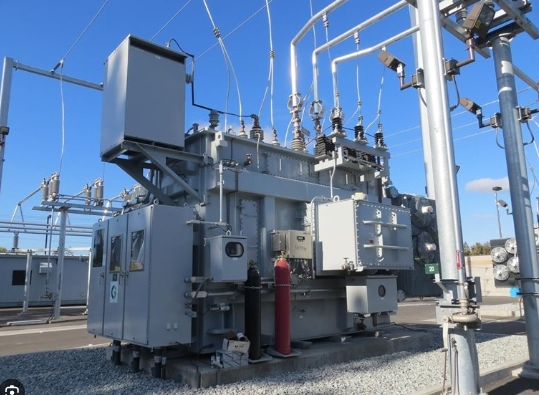
Ratepayers understand that municipalities face financial pressure. But transparency, lawful tariff structuring, and fair treatment of compliant households remain essential.

This investigative review examines the operational collapse, governance failures, legal breaches, administrative shielding, and ethical deterioration surrounding the Harry Giddey Park animal welfare tragedy in Mossel Bay.
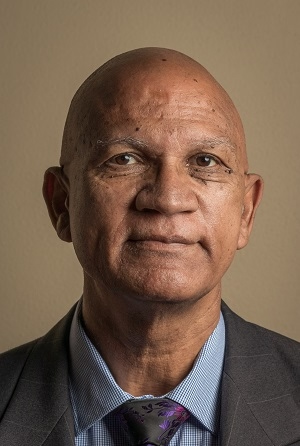
When Colin Puren was appointed as the Municipal Manager by the Mossel Bay Local Municipality, the Council authorized Executive Mayor Dirk Kotzé to negotiate his total remuneration package. Puren was placed on the maximum allowable salary scale, which amounted to R1,538,800 annually.

Mossel Bay’s desalination plant forms an important part of the town’s water-security strategy. However, desalination must be understood correctly.
The recent Western Cape High Court judgment in Coetzee NO and Another v Mosselbay Municipality exposes a deep, structural vulnerability within the Mossel Bay Municipality

Rates and Fixed Charges Are Outpacing Reality Household Costs Are Rising Faster Than Incomes Over the past three years, municipal rates and fixed charges in Mossel Bay have increased by

Joining MossRates is simple, subscribe now its free – as we progress free and paid voter options will become available

MossRates is a registered, independent ratepayer association formed to represent the interests of residents, homeowners, and businesses in Mossel Bay. Its purpose is simple but essential: to promote transparency in municipal decision-making, advocate for fairness in rates and tariffs, and support sustainable environmental and infrastructure outcomes. MossRates exists to ensure that ratepayer voices are informed, organised, and meaningfully heard.

At MossRates, we believe that real change starts with how we treat each other. That’s why we’re proud to introduce our official Code of Conduct and Publication Standards—a simple, clear guide to ensure our community remains respectful, constructive, and impactful.

Over the past two decades, Mossel Bay’s freshwater systems — from the Hartenbos and Klein Brak Rivers to smaller tributaries — have been under growing pressure. Once rich with native fish, amphibians, and riparian vegetation, many of these systems are now classified as heavily modified or critically endangered. This article explores how alien species, excessive water extraction, and pollution are converging to erode the ecological integrity of these river systems. Drawing from the Mossel Bay Biodiversity Assessment (2019)

The Powertown informal settlement in Mossel Bay has grown over many years on land that is environmentally sensitive, flood-prone, and unsuited to formal development. Despite official plans to relocate the community to properly serviced housing — including sites like Sonskynvallei — implementation has stalled. Meanwhile, infrastructure such as water, sanitation, and electricity has been extended in practice, raising questions about planning consistency, regulatory compliance, and how informal settlement management aligns with broader municipal strategies.

Water is essential for everyday life, local businesses, agriculture, and the environment. In Mossel Bay, the availability and sustainable management of water are key to supporting a growing community and economy. This article outlines the current state of water security in the region, explains the underlying factors, and highlights practical areas for planning and community involvement.

Municipal NPCs: Useful Partners — or a Blind Spot in Accountability? A Non-Profit Company (NPC) is a legal entity incorporated under the Companies Act to pursue a public-benefit or community-interest

Value-Added Tax (VAT) is a nationally regulated tax governed by the VAT Act and administered by SARS. Municipalities act as vendors for certain taxable supplies, but not all municipal charges are subject to VAT. Where VAT is applied incorrectly or without clear legal basis, it directly affects household affordability, business costs, and public trust. This article outlines the principles governing VAT on municipal charges and explains why clarity and proper classification are essential.

Public Participation Isn’t Optional: Why Ratepayer Voices Matter in Mossel Bay South African local government is built on a constitutional promise of accountability, transparency, and participatory governance. Municipal councils aren’t

When Rates and Fixed Charges Outpace Incomes, Everyone Feels It Mossel Bay’s property rates and fixed electricity charges have reportedly doubled within a short period. That kind of jump is

Understand the causes and consequences of river and estuary pollution — and why transparency, accountability, and action are urgently needed.

Waste management is a core municipal function, yet the status quo in Mossel Bay has reached a critical junction. The landfill — which serves multiple district municipalities — is approaching capacity limits, organic waste is being dumped with high levels of plastic contamination, and opportunities for local recycling, composting and revenue generation remain underdeveloped. Residents, ratepayers and local businesses are calling for a system that protects the environment, creates jobs, and sustains service delivery without burdening future generations.

Illegal land occupation is increasingly visible across Mossel Bay. While the humanitarian dimensions of housing scarcity are real, the absence of effective mitigation, enforcement and policy frameworks has allowed unauthorised settlements to expand with limited accountability. This places disproportionate financial, administrative and social burdens on ratepayers — who fund municipal services, infrastructure, policing resources and legal processes. This article lays out the root causes, local impacts, and ratepayer perspectives on unchecked illegal land occupation.

Urban development is often promoted as a pathway to growth, sustainability, and inclusion. In practice, when development proceeds faster than infrastructure funding, transparent costing, and enforceable developer contributions, the financial burden does not disappear. It is transferred. In Mossel Bay, this transfer has taken the form of rising rates and escalating fixed charges, placing long-term financial obligations on existing ratepayers. This article explains how and why that happens.